Julie and Russell’s financial crisis
Straight ManJulie and Russell’s financial crisis turns a new family home into evidence of how quickly confidence can give way to insecurity. The house is both an ambitious commitment made despite limited means and a source of strain that draws William Henry Devereaux, Jr. and Lily Devereaux into their daughter’s affairs. When Russell’s expected employment fails to materialize as planned, mortgage obligations remain while the couple’s income and savings diminish. The resulting pressure is financial, but it also unsettles the family’s relationships and sense of security.
The House and the Decision to Build
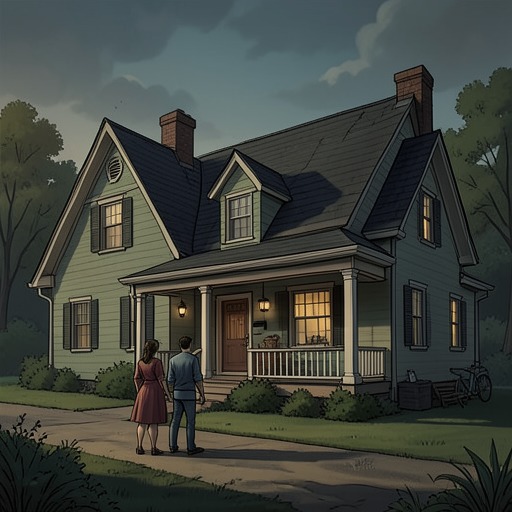
Julie and Russell began building their house in the autumn, despite William Henry Devereaux, Jr.’s view that they could not afford it. The subject is difficult for the parents to raise: William and Lily have agreed to avoid interfering in their children’s lives, and William dislikes meddling even when he believes someone should intervene. His concern does not make him wholly detached, however. He and Lily lend the couple money, supporting them materially while withholding the judgment that might challenge their decision.
William sees Julie’s confidence about the project as poorly grounded. She regards the house not only as a home but as a tax shelter, a rationale he considers mistaken because, in his view, such a shelter suits people with high rather than low incomes. His attempt to explain this does not persuade her. He understands her determination to build as an intention fixed in advance, one that treats financial reality as an obstacle to overcome rather than a reason to reconsider. The conflict is therefore not simply between a cautious parent and a risky purchase: William believes that reasoning with Julie has made him part of the opposition she expects to defeat.
The project also carries an intimate family resemblance. Julie and Russell use the same contractor and plans as William and Lily, and their house resembles the parents’ home. William only fully recognizes the likeness when he notices that the new house has a deck at both the front and rear. Lily supplied the plans. The couple had also imagined features that would distinguish the houses, including a pool and Jacuzzi, but postponed those additions. The imitation makes the project feel personal to William, even as its financial risks belong to Julie and Russell.
Income, Debt, and the Reversal in Russell’s Prospects
The couple’s position worsens when Russell leaves a good job for what he expects to be a better one. The new project depends on several large government loans, but the loans are not approved on the expected schedule. Russell acknowledges that the delay could last months, perhaps a year. He is a computer software specialist and does some freelance work, while Julie earns a service-manager’s salary at a department store. William doubts that her earnings alone can sustain the household’s commitments and says he does not know how they are living during the interruption.
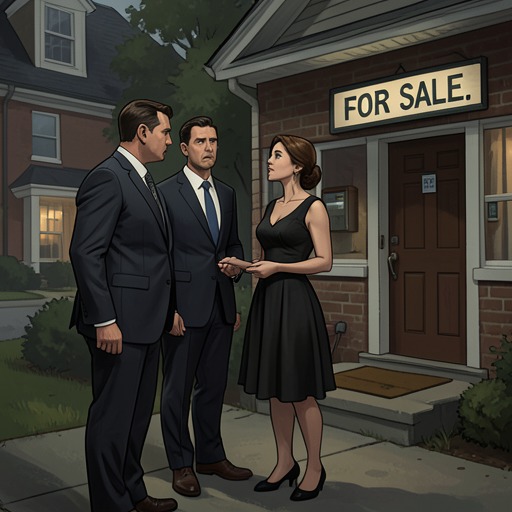
The combination of a mortgage, reduced income, depleted savings, and uncertain future employment makes the crisis more than a temporary inconvenience. William estimates that there is roughly an even chance the house will bankrupt the couple. That is his assessment, not a confirmed outcome: the evidence establishes their exposure and mounting difficulty, but does not establish whether they ultimately lose the house or recover financially.
The parents’ loan adds another layer of dependence. William does not know exactly how much they have lent, and he worries that Lily may have been more generous than he realizes. He has kept his doubts to himself, a silence that leaves him feeling partly responsible. If the house does bring financial ruin, he fears that his failure to offer psychological support will count as having failed Julie, even though he has privately judged the decision unsound. His position is caught between respecting the couple’s independence and feeling accountable for the consequences.
The Unfinished House as Evidence
When William visits the property, its condition makes the couple’s financial strain legible without resolving what will happen next. The driveway remains unpaved, the lot has not been landscaped, and the windows have no shutters. A bright blue tarp covers the opening for the chimney. Nearby, an earth mound and a partly dug hole add to the signs of an interrupted project. William reads these details as evidence that Julie and Russell have run out of money and that the bank has lost confidence in them.
The unfinished work also sharpens the emotional effect of the house’s resemblance to his own. William’s first thought is that the couple may not make it; almost at once, he feels that he is looking at his own house rather than theirs. The parallel connects their financial danger to his private uncertainty about whether he himself will be all right. The house thus works as more than a balance sheet in architectural form: its incomplete state reflects the fragility of a family member’s plans while bringing that fragility close to William’s own life.
Lily offers information that could make the couple appear more prudent, emphasizing that they have postponed the pool and Jacuzzi. William’s observations do not reassure him. The deferred luxuries coexist with more basic unfinished work, and the visible signs of shortage outweigh the reassurance he is offered. The scene preserves this disagreement between hope and alarm without pretending that either the parents’ loan or their judgment can settle the couple’s future.
Family Pressure and the Limits of Support
The financial strain shapes the couple’s dealings with William. After he has not seen them for about a month, Russell explains that their debt to him makes casual conversation uncomfortable. Julie describes the household’s position as mortgage payments rising against falling personal income and savings. Russell adds that Julie’s spirits are low, then worries that his comment might sound like criticism of William’s parenting. Their exchange brings money into the open while showing how readily a discussion of debt can touch family pride and blame.
William answers with irony about his own role as a parent, while Julie points out that Lily earned the family’s income when William was teaching. The exchange places Julie’s financial difficulty within a longer family history of work and responsibility, but it does not produce a plan for the mortgage. Instead, the scene conveys how each person approaches the same crisis from a different position: Russell is indebted and embarrassed, Julie is burdened by payments and reduced resources, and William is unsure whether reassurance, restraint, or intervention would help.
Julie’s anxiety also reaches beyond the house. She tells William that she could not bear it if her parents divorced at that moment. Her fear is connected to the older family pattern in which Karen, influenced by friends whose parents had undergone acrimonious divorces, interpreted ordinary disagreements and conversations as signs that William and Lily might separate. Karen’s worries reached Julie, who now fears a parental rupture while her own household is already under pressure. The evidence does not say that the parents are divorcing; it shows that Julie’s financial crisis coincides with a heightened need for family stability.
What the Crisis Leaves Unresolved
The account establishes the causes and visible conditions of Julie and Russell’s financial trouble, but not its final outcome. Russell’s new employment remains delayed by unapproved loans; freelancing and Julie’s salary offer some income, yet William doubts that they can cover the obligations. Their parents have lent money, and William fears both financial loss and the possibility that silence will be remembered as inadequate support. The unfinished exterior, the postponed amenities, and the couple’s discomfort about debt make the danger concrete, while the uncertainty about what comes next remains intact.
That unresolved position is central to the crisis’s family significance. William’s judgment that the house was unaffordable coexists with his participation in sustaining the couple through loans and with his reluctance to intrude. Julie and Russell’s project therefore tests the boundary between adult independence and parental responsibility: the parents cannot make the decision for them, but their money and emotional support have become part of its consequences. The house stands at once as Julie’s chosen home, Russell’s interrupted career bet, and a pressure point in the family’s attempts to remain close without taking control.